How to choose
Choosing a sofa and a table for the room you actually have
Depth decides a sofa, not length. How to choose on floor you can spare, the fire labels UK upholstery must carry, and cost per year rather than price.
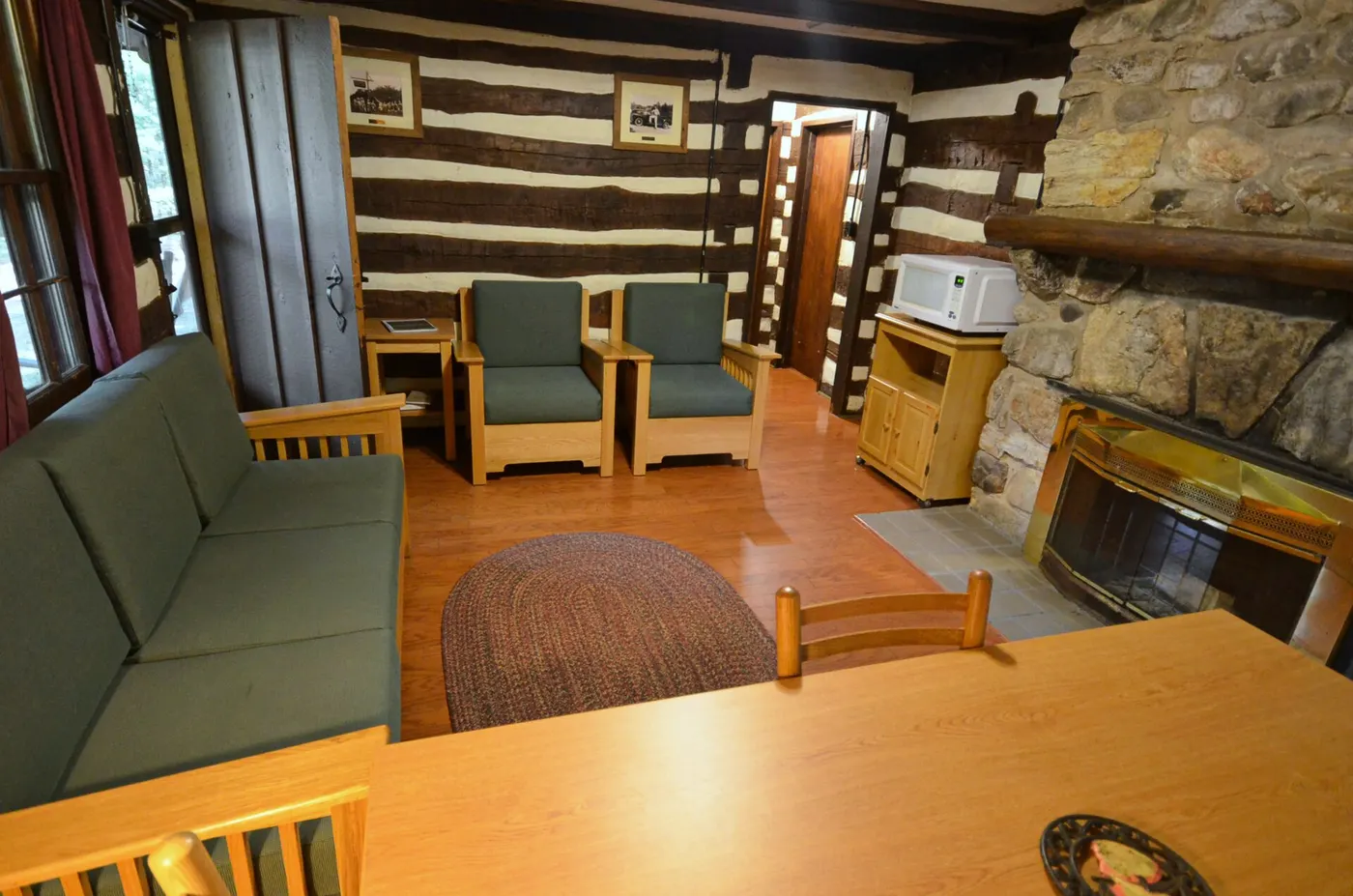
Most regretted furniture is not badly made. It is correctly made and the wrong size, bought because the showroom floor was twice as wide as the room it was going into and nobody wrote a number down.
This guide takes the three things that actually decide a living room: how much floor the piece takes, what the labels on British upholstery are telling you, and what the thing costs for each year you keep it. Prices are examples used to show the arithmetic and were checked on 2026-11-03.
Depth is the decision; length is the easy part
Sofa length is constrained by a wall you have already measured. Depth is constrained by everything else in the room, and it is the dimension that decides whether the space reads as generous or as full.
Work it across the room rather than along it. In a room 340 cm from wall to wall, a sofa 95 cm deep plus a 40 cm gap to the coffee table, a 50 cm table and a 75 cm walkway behind it uses 260 cm and leaves 80 cm. Swap in a deeper 105 cm sofa and the same four elements use 270 cm, leaving 70 cm. Ten centimetres of seat depth has taken an eighth of the remaining floor.
Deep seats also change who can use them. A 105 cm sofa seats someone tall beautifully and leaves a shorter person's feet off the floor, which is why a household that spans both usually ends up with the shallower frame and a cushion. The room-fit calculator on this site uses the same clearances as the sum above, so you can put your own wall measurement in and see what is left.
| Element | Shallower layout | Deeper layout |
|---|---|---|
| Sofa depth | 95 cm | 105 cm |
| Gap from sofa to coffee table | 40 cm | 40 cm |
| Coffee table depth | 50 cm | 50 cm |
| Walkway behind the table | 75 cm | 75 cm |
| Used, of 340 cm | 260 cm | 270 cm |
| Floor left over | 80 cm | 70 cm |
These clearances are planning figures this site uses consistently, not published standards. A 75 cm walkway lets two people pass if one turns sideways; 90 cm lets them pass square on.
The labels British upholstery has to carry
The Furniture and Furnishings (Fire) (Safety) Regulations 1988 set ignitability requirements for upholstered furniture sold in the United Kingdom, with separate provisions for upholstery, filling materials, loose fillings, and permanent and non-permanent covers, and with schedules covering cigarette and match ignitability tests. Goods manufactured before 1950 are outside the regulations.
Two labels follow from that. A display label is required on furniture other than mattresses and bed-bases while it is offered for sale, and a permanent label carries information about the materials and fire performance of the piece itself. The display label comes off when you take delivery; the permanent one stays, usually under a seat cushion or on the underside of the frame.
This matters most second-hand and most when importing. A frame bought from a private seller may predate the regulations or may have lost its permanent label, and a piece shipped in from abroad was built to whichever rules applied where it was made. Finding the permanent label is a two-minute job that tells you which of those situations you are in.
- A display label appears on upholstered furniture offered for sale, other than mattresses and bed-bases
- A permanent label stays with the piece and records its materials and fire performance
- The regulations cover upholstery, filling materials, loose fillings and both permanent and non-permanent covers
- Cigarette and match ignitability tests are set out in the schedules to the regulations
- Goods manufactured before 1950 are excluded from the regulations
Cost per year, not price
A sofa is one of the few household purchases where the honest unit is a year. Divide the price by the years you will keep it and the comparison between a budget frame and a mid-range one usually inverts.
At the example prices below, a £900 sofa kept 10 years costs £90 a year. A £450 sofa replaced after 4 years costs £112.50 a year — 25 percent more, for a piece that was half the price. A £1,400 sofa kept 15 years is £93.33 a year, which puts it level with the £900 one and ahead of the cheap one.
What decides which column you land in is not the price. It is whether the frame can be reupholstered, whether cushion interiors can be replaced separately, and whether the style is one you will still want. A hardwood frame with replaceable seat interiors reaches year ten; a glued frame with cushions sewn shut generally does not, whatever it cost.
| Example price | Kept 4 years | Kept 10 years | Kept 15 years |
|---|---|---|---|
| £450 | £112.50 | £45.00 | £30.00 |
| £900 | £225.00 | £90.00 | £60.00 |
| £1,400 | £350.00 | £140.00 | £93.33 |
Each cell is the price divided by the years in the column heading, with nothing subtracted for resale. The cost-per-year calculator on this site takes a resale figure if you expect one.
Your rights if what arrives is wrong
Section 22 of the Consumer Rights Act 2015 gives a short-term right to reject goods that do not conform to the contract, and sets the window at the end of 30 days beginning with the first day after ownership has transferred, the goods have been delivered and any required installation has been completed. That is for goods that are faulty, not as described or not fit for purpose.
Buying at a distance adds a separate right. Government guidance for sellers states that a customer has 14 days from receiving the item to tell the seller they want to cancel, a further 14 days to send it back, and the seller has 14 days from receiving it to refund. Those three periods are independent of whether anything is wrong with the piece.
The distinction decides what to do when a sofa arrives in the wrong fabric and when one arrives in the right fabric and simply looks enormous. The first is a conformity question and the 30-day right applies; the second is a change of mind, and the distance-selling cancellation route is the one that exists, with the return carriage on a large item frequently falling on the buyer.
What actually decides it
Measure the room across the narrow direction first and subtract the clearances. If the depth you want leaves under about 70 cm of spare floor, the room is telling you to go shallower rather than telling you to buy a smaller rug.
Then pick on years. At the example figures a £900 sofa that reaches year ten costs £90 a year, while a £450 sofa replaced at year four costs £112.50 — £22.50 a year more for the piece that was half the price, and nothing in a showroom will tell you that. The permanent fire label, a frame that could be reupholstered and cushion interiors sold separately are the three signals that the ten-year column is realistic.
Before you buy
- Measure the room across its narrow direction and write the number down before shopping
- Subtract sofa depth, a 40 cm gap, the coffee table depth and a 75 cm walkway from it
- Reject any depth that leaves under about 70 cm of spare floor
- Find the permanent fire label on anything upholstered before you buy it
- Ask whether cushion interiors are sold separately and whether the frame can be reupholstered
- Divide the price by the years you honestly expect to keep it
- Note the delivery date, because the 30-day right to reject runs from the day after delivery
Questions readers ask
- How much floor should I leave in front of a sofa?
- This site plans with 40 cm between the sofa and the coffee table and 75 cm for the walkway behind it. Those are planning figures rather than standards. At 75 cm two people pass if one turns sideways; at 90 cm they pass square on, which is worth having where a walkway is also the route to a door.
- Is a £450 sofa ever cheaper than a £900 one?
- Only if you keep it as long. At the example prices here, £450 over 4 years is £112.50 a year and £900 over 10 years is £90 a year. The cheaper sofa wins at £45 a year if it also reaches ten, which depends on whether the frame and the cushion interiors can be repaired rather than on the price.
- What is the permanent label on my sofa for?
- It carries information about the materials and fire performance of that piece under the Furniture and Furnishings (Fire) (Safety) Regulations 1988. It stays with the furniture, usually under a seat cushion or on the frame underside, unlike the display label which is only required while the item is offered for sale.
- Can I return a sofa that simply does not fit?
- Not under the 30-day short-term right to reject, because that covers goods which do not conform to the contract and a correctly supplied sofa does. For a distance purchase you have 14 days from receipt to cancel and 14 more to return it, and on a large item the return carriage commonly falls on the buyer.
- Does second-hand upholstery have to meet the fire regulations?
- The regulations exclude goods manufactured before 1950, and a private seller is not in the same position as a retailer. The practical step is to look for the permanent label before buying: if it is there, you know what you have, and if it is not, you are relying on the age of the frame instead.
Sources
- legislation.gov.uk — Furniture and Furnishings (Fire) (Safety) Regulations 1988: upholstery, filling materials, labelling, ignitability test schedules, pre-1950 exclusion — checked 2026-11-03
- legislation.gov.uk — Consumer Rights Act 2015, section 22: the short-term right to reject ends 30 days after delivery, transfer and any installation — checked 2026-11-03
- GOV.UK — Accepting returns and giving refunds: 14 days to cancel, 14 days to return, 14 days to refund on distance sales — checked 2026-11-03
Advertising is not enabled on this site yet. When it is, ads will be labelled and kept visually separate from the guides.